


Dubsado ACH vs Card Fees: Save More
- Mary Davis

- Apr 19
- 5 min read
Updated: May 23
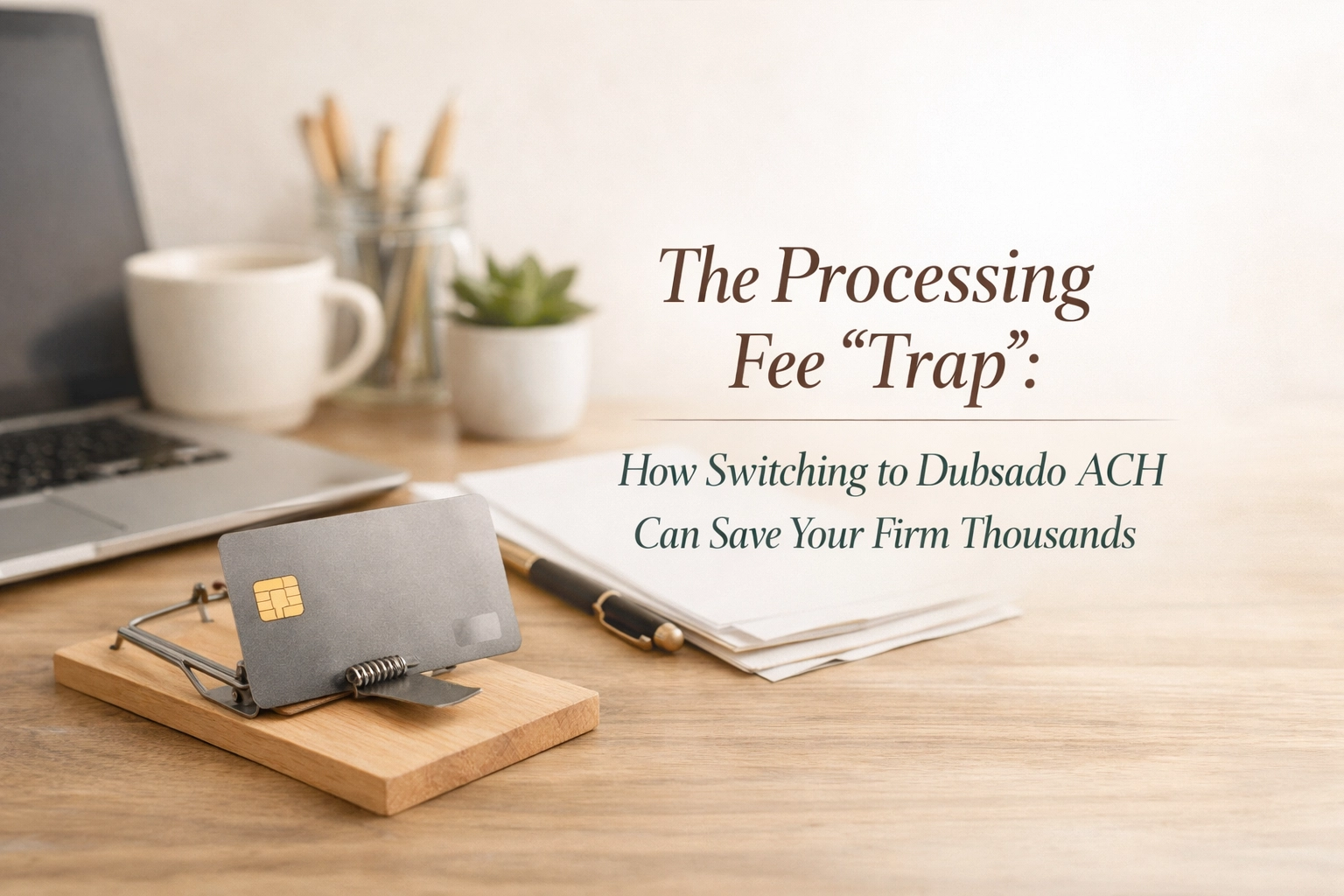
Ever had that moment where you’re looking at your monthly merchant statement and you feel a tiny pang in your chest? You see the total amount you invoiced, a number you worked incredibly hard for, and then you see that "processing fees" line item. It’s a number that might seem small on a single transaction, but when you add it up over a month or a year, it starts to look like a luxury car payment or a new hire's salary.
As an established firm owner, you’ve likely accepted these fees as the "cost of doing business." We want to make it easy for clients to pay us, right? Credit cards are convenient, they're fast, and they're the industry standard. But there is a point where convenience starts to cost more than it’s worth.
If you’re using Dubsado to manage your service-based business, you might be sitting on a hidden win that could save you thousands of dollars every single year. It’s time to talk about the "trap" of the standard 2.9% fee and how Dubsado’s ACH plan is the game-changer your profit margins have been waiting for.
The 2.9% Trap: Why Small Percentages Are Deceptive
We’ve all been conditioned to think that 2.9% is just "the way it is." Stripe, PayPal, and most major processors hover around that 2.9% plus a small per-transaction fee (usually $0.30). On a $100 invoice, you’re losing $3.20. It feels like nothing. You’d spend more on a cup of coffee.
But as your firm grows and your project sizes increase, that "small" percentage starts to scale in a way that hurts.
For a service-based business or an established firm owner, invoices aren’t usually $100. They are $2,000, $5,000, or even $15,000. This is where the math stops being a "convenience fee" and starts being a significant drain on your bottom line.
When you process a $5,000 invoice via a standard credit card processor at 2.9%, you’re handing over $145. For one invoice. If you do that ten times a month, you’ve just spent $1,450 on nothing but the privilege of moving money from your client’s bank account to yours.
The Hero of the Story: Dubsado ACH
If you’re already using Dubsado, you might have seen the option for ACH (Automated Clearing House) payments. Often, we skip over it because we assume it’s just another way to get that same 2.9% taken out.
But here is the "hidden win": Dubsado’s ACH plan through Stripe (or their native payment options) offers a rate of 0.8% with a $5 maximum cap.
Read that again: A $5 maximum cap.
This means it doesn't matter if your invoice is $1,000, $5,000, or $20,000. The most you will ever pay for that transaction to be processed is $5.

Let’s Look at the Real-World Math
To really see why this is such a game-changer for an established firm owner, we have to look at the side-by-side comparison. Let's compare the standard 2.9% credit card fee against the Dubsado ACH $5 cap.
If you are an established firm owner managing multiple high-ticket clients, these savings aren't just "nice to have." They are transformative. Over the course of a year, switching your primary payment method from credit cards to ACH can easily keep $5,000 to $15,000 (or more) inside your business.
That is money that could go toward your retirement, your team’s bonuses, or reinvesting into better systems, like a QBO Deep Dive Consultation to ensure your books are as optimized as your payment processing.
Why Do We Fall for the "Trap"?
If the savings are this massive, why isn't everyone doing it? There are usually three main reasons:
The "Friction" Fear: We worry that asking a client to put in their routing and account number instead of a credit card number will cause friction. We don't want to make it "hard" for them to pay us.
Ignorance of the Cap: Many business owners know ACH is cheaper (usually 0.8% to 1%), but they don't realize the $5 cap exists. They think they’ll still be paying $80 on a $10,000 invoice. While $80 is better than $290, it’s not as exciting as $5.
Speed of Funding: Credit card payments usually hit your bank account in 1-2 business days. ACH can sometimes take 3-5 business days.
Here’s the reality for an established firm: Your clients are also business owners or high-level professionals. They understand bank transfers. In many cases, for very large invoices, they actually prefer ACH because it’s more secure and doesn't hit their credit card limits.
As for the speed? Once you have a steady cash flow, the difference between two days and five days is negligible compared to the thousands of dollars you’re saving in fees.

How to Make the Switch Without Losing Your Mind
If you’re ready to stop the fee bleed, you don’t have to do it all at once. You can transition your service-based business in a way that feels supportive to your clients.
1. Enable ACH in Dubsado
First, make sure you actually have it turned on! If you're using Stripe with Dubsado, you have to enable ACH in your Stripe dashboard and then ensure it's selected as a payment option in your Dubsado settings. We actually have a great resource on optimizing your Dubsado setup that covers some of these technical hurdles.
2. Set the Standard
For new clients, simply make ACH your default. In your initial discovery call or your contract, you can mention, "We process all payments via secure bank transfer (ACH) to keep our overhead low and our service quality high." Most clients won't even blink.
3. Incentivize or Require
For very large projects, many established firms make ACH a requirement. If the invoice is over a certain amount (say, $3,000), the credit card option is disabled. Alternatively, you can offer a small "cash discount" for ACH, though we find that simply explaining that ACH is the preferred method is usually enough.
The QBO Cleanups Perspective: Keeping What You Earn
At QBO Cleanups, we aren't just here to categorize your transactions. We’re here to help you understand your financial health. When we do a QBO Check-up Session, one of the first things we look at is where your money is going.
Seeing thousands of dollars categorized as "Bank Service Charges" or "Merchant Fees" is a red flag for us: not because you're doing something wrong, but because we see an opportunity for you to be more profitable.
Our goal is to act as your partner in growth. We want to see your firm thrive, and that means helping you identify these "hidden wins." When your books are organized and your processes are optimized, you have the clarity to see exactly how much those 2.9% fees are actually costing you.

Final Thoughts: It’s Your Money
At the end of the day, those processing fees are a tax on your success. The more you earn, the more they take. By leveraging the tools already available to you: like the Dubsado ACH $5 cap: you’re taking back control of your firm's revenue.
It might seem like a small administrative change, but for a growth-oriented service-based business, it’s one of the easiest ways to increase your take-home pay without having to sell a single extra contract.
If you’re feeling like your financial systems are a bit unorganized or you’re not sure where your money is leaking, let’s talk. Whether it’s a Discovery Call to see how we can help or a full cleanup of your existing books, we’re here to support you.
Don’t let your hard-earned revenue get caught in the 2.9% trap. Switch to ACH, keep that $5 cap in your pocket, and let’s get those books in tip-top shape.
Ready to get your bookkeeping as streamlined as your payment processing? Book a call with us today and let’s make sure you’re keeping more of what you earn.


Comments